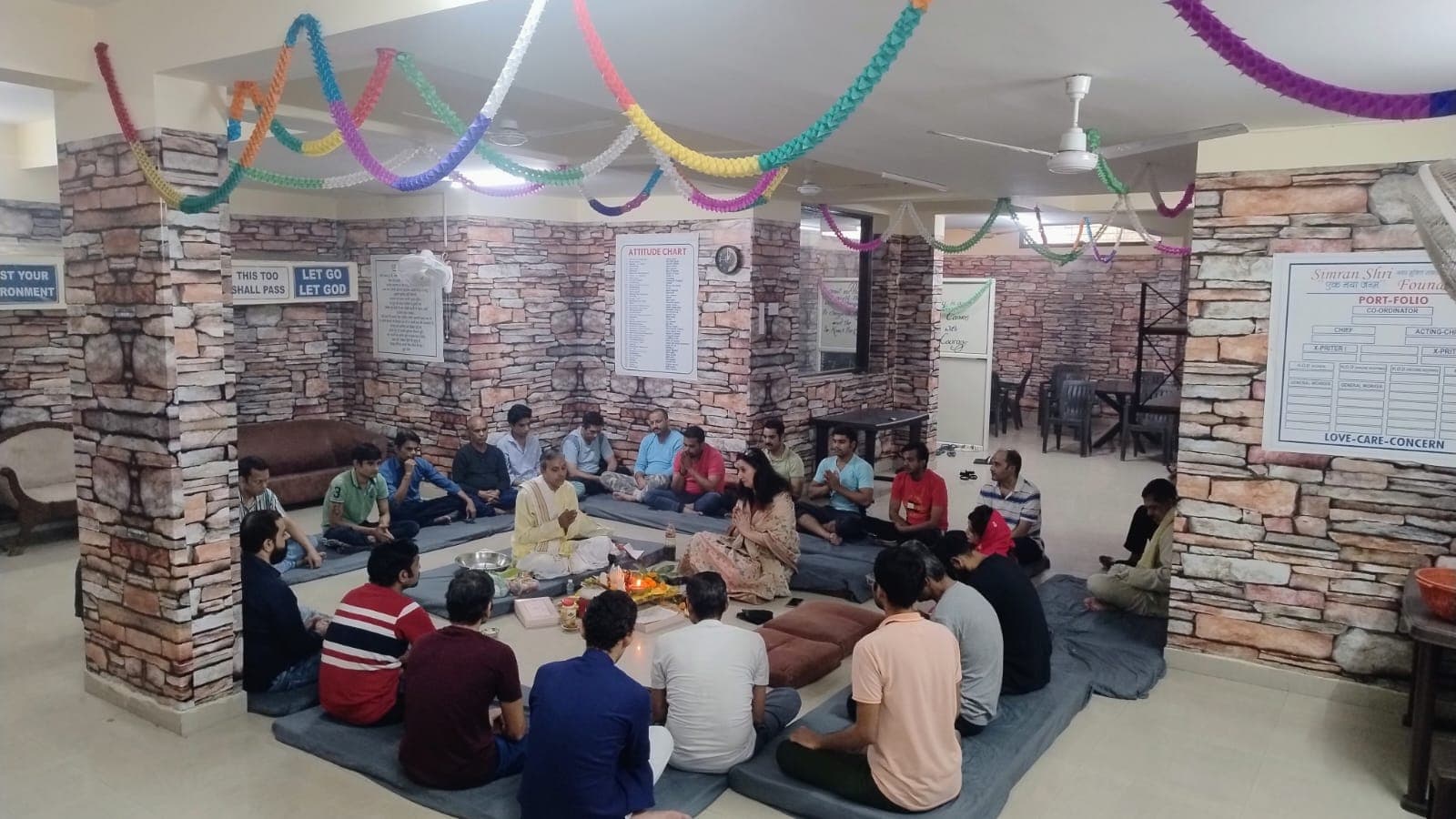
When a patient with alcohol or drug dependency completes ten weeks of residential treatment and returns home, the single biggest predictor of whether they stay sober is not the quality of the rehab programme. It is what they return to. A recovery-supportive household — informed, aligned, and free of the patterns that accompanied active addiction — gives the patient a real chance. A household where nothing has changed except the patient's absence for three months does not.
This is why family therapy is not an add-on at SimranShri. It is a core clinical module running in parallel with the patient's treatment, and its outcomes are measured as carefully as the patient's own.
Why addiction is a family illness
The phrase "family illness" is sometimes dismissed as a therapy cliché. It is not. It describes a specific clinical reality: families living with a substance-dependent member adapt their behaviour to accommodate the illness, and those adaptations become part of the illness itself. Over years, the adaptations stabilise into patterns that nobody chose and nobody can easily unchoose.
A spouse learns to call in sick on the patient's behalf. A child learns not to bring friends home. A parent learns to pay off debts quietly to preserve the family name. None of these adaptations are moral failures — they are rational responses to a difficult situation. But collectively they create a household that has adjusted itself to the addiction, which means the addiction has been absorbed into normal life. Treatment has to undo both sides — the patient's use and the household's adaptations.
The roles families fall into
Family therapy literature identifies recurring roles that family members unconsciously take on. Not every family has all of them, and the roles can shift, but the patterns are common enough to be predictive.
The Enabler
Usually the closest family member — spouse or mother. The enabler manages the consequences of the addiction so that the person never directly faces them. Calls the boss. Pays the bills. Covers for the missed events. Does this out of love, out of fear, out of shame. The effect, regardless of intent, is to keep the addiction survivable, which keeps it going.
The Hero
Usually an older child or sibling. The hero achieves — academically, professionally, socially — and becomes the family's public face, the evidence that "we are fine." Carries an enormous private cost. Often does not access help until decades later because "the addict was the problem, not me."
The Scapegoat
Often a younger child or a sibling who struggles visibly. Absorbs family tension and gets blamed — sometimes for the addiction itself. The addicted family member's behaviour gets explained as a response to the scapegoat's difficulties. The scapegoat sometimes develops their own substance problem.
The Lost Child
Usually a middle child. Becomes invisible as a survival strategy. Asks for nothing, causes no trouble, makes themselves inconspicuous. Emerges from family-of-addiction households often having no clear sense of their own needs or preferences.
The Mascot
Usually the youngest. Uses humour to defuse tension. Becomes skilled at reading the room and lightening the mood. Often arrives in adulthood unable to access or express their own distress because the mascot role does not permit it.
These roles are not destiny. They are patterns. Naming them is the first step of family therapy because once named they become visible, and once visible they can be changed.
What family therapy sessions actually look like
At SimranShri, the family therapy module begins in week three of the patient's programme and runs weekly through discharge and into aftercare. A typical structure:
Session 1 — Psychoeducation
The family meets with our therapist without the patient. The conversation covers the clinical model of addiction, the distinction between supporting the person and enabling the illness, and an honest assessment of what the family has been through. Most families have never had this conversation before.
Sessions 2-4 — Mapping the patterns
Still without the patient. The therapist works with the family to map the roles each member has been playing, the rules that govern how the household talks about drinking or using, and the specific enabling behaviours that have become normal. The goal is not blame — it is visibility. Families often describe this phase as "seeing the shape of something we had been living inside."
Sessions 5-8 — Joint sessions with the patient
The patient joins. Early joint sessions are structured conversations, not open discussion — the therapist controls the agenda to prevent the session collapsing into historical grievances. Topics include: what each person has lost to the addiction, what the patient is taking responsibility for, what the family is willing to change, and what specific agreements will govern post-discharge life.
Sessions 9+ — Aftercare integration
Post-discharge, family sessions continue monthly for continueds. The focus shifts to what is actually happening at home — new patterns that are working, old patterns that are reasserting themselves, conflict that is arising, and agreements that need to be renegotiated. Most relapses are predictable from what happens in these sessions, and most can be prevented by catching the early pattern.
These are different interventions. Family therapy in addiction is specifically focused on the addiction-related patterns in the household. If there are deeper relational issues — long-standing marital conflict, trauma that precedes the addiction — those may need separate work. Our therapists will say so directly when that is the case.
The outcomes family therapy produces
The best-studied outcome is reduced relapse rates. Families that complete the full continued programme show substantially lower relapse rates in the patient at one year compared with families that decline or drop out. The mechanism is straightforward: the patient returns to a household that has changed, which supports the change the patient has made.
The less-measured outcomes matter too. Spouses describe being able to sleep through the night for the first time in years. Parents stop checking bank statements daily. Siblings reconnect with each other without the addiction as the constant unspoken topic. Children — often the most overlooked — get access to words for what they have been living through, and the damage of those years becomes something they can work on rather than something they are stuck inside.
What family therapy is not
It is not group confrontation of the patient. It is not a platform for the family to list grievances. It is not a promise that the family will be "healed" by the end of the programme. And it is not optional — at SimranShri, participation in family therapy is a condition of the patient's treatment, because without it the patient's own work is measurably less likely to hold.
Some families resist the framing. The common objection is "we are not the ones with the problem." Technically correct and clinically beside the point. The problem is in the household, and the household is what the patient returns to. Families that engage with this reality give their loved one the best chance. Families that decline the work find themselves, a year later, starting the cycle again.
Our admissions counsellors can walk you through what participation looks like, scheduling, and what to expect in the first session. Call our admissions line or use the contact form — the first conversation carries no commitment.
- Post-discharge relapse risk is driven substantially by what the patient returns to — which is why family therapy runs in parallel with patient treatment.
- Addiction is a family illness in a specific clinical sense: households adapt to the illness, and those adaptations become part of the illness itself.
- Family roles — Enabler, Hero, Scapegoat, Lost Child, Mascot — are recurring patterns. Naming them makes them changeable.
- Family therapy at SimranShri runs 12+ sessions spanning patient treatment and the first year of aftercare. Participation is a condition of treatment.
- The best-measured outcome is lower relapse rates. The less-measured outcomes — spouses sleeping through the night, children getting words for their experience — matter just as much.
- Family therapy is not marriage therapy and is not a platform for grievances. It is structured clinical work focused specifically on addiction-related patterns.