
A common misconception is that rehab is the treatment and what happens after discharge is the test. That framing is wrong and produces worse outcomes. The correct framing: residential treatment is phase one, and the continueds of structured aftercare is phase two. Without phase two, the gains of phase one do not reliably hold.
The data on this is unambiguous. Patients who engage fully with structured aftercare show substantially higher rates of sustained sobriety at one year than patients who complete residential treatment and then disengage. The difference is large enough to dominate every other variable — type of substance, severity of dependency, demographic background.
What the post-discharge year actually looks like
The patient who walks out of residential rehab at the end of twelve weeks has been operating in a protected environment. Meals were prepared. supportive care was dispensed. Triggers were absent. Peers in recovery were present daily. Therapy was scheduled.
On day one at home, everything changes. The patient is back in the kitchen where they used to hide bottles. The friends who drank with them are phoning. The work inbox is full. The in-laws are visiting next weekend. Sleep is harder. Boredom arrives in a way it did not in rehab. The body and brain that have just completed detox are still rebuilding — six months post-detox, brain neurochemistry is still normalising. The patient is not yet the person they will be in two years. They are a person doing the hardest work of their life, in an environment that has not changed as much as they have.
Aftercare is what walks with them through that year.
Why relapse clusters in the first 90 days
Relapse risk is not uniform across the post-discharge year. It is front-loaded. The first 30 days carry the highest risk, and the first 90 days account for the majority of relapses that will happen in the first year.
The reasons are clinical, not moral.
- Post-detox brain chemistry is still normalising — mood, sleep, and craving regulation are all compromised.
- Social triggers that were absent in rehab are now present every day.
- The structural scaffolding of the residential day is gone — unstructured time is hard for newly-sober patients.
- Overconfidence — "I feel fine, I don't need this as much as I thought" — is extremely common in the first 30 days and correlates with relapse in the 60-90 day window.
- Small lapses that would have been immediately caught in rehab go unnoticed or get rationalised at home.
Our aftercare protocols are calibrated to this risk curve — contact is most intensive in the first 90 days and eases later as stability builds.
The SimranShri aftercare programme
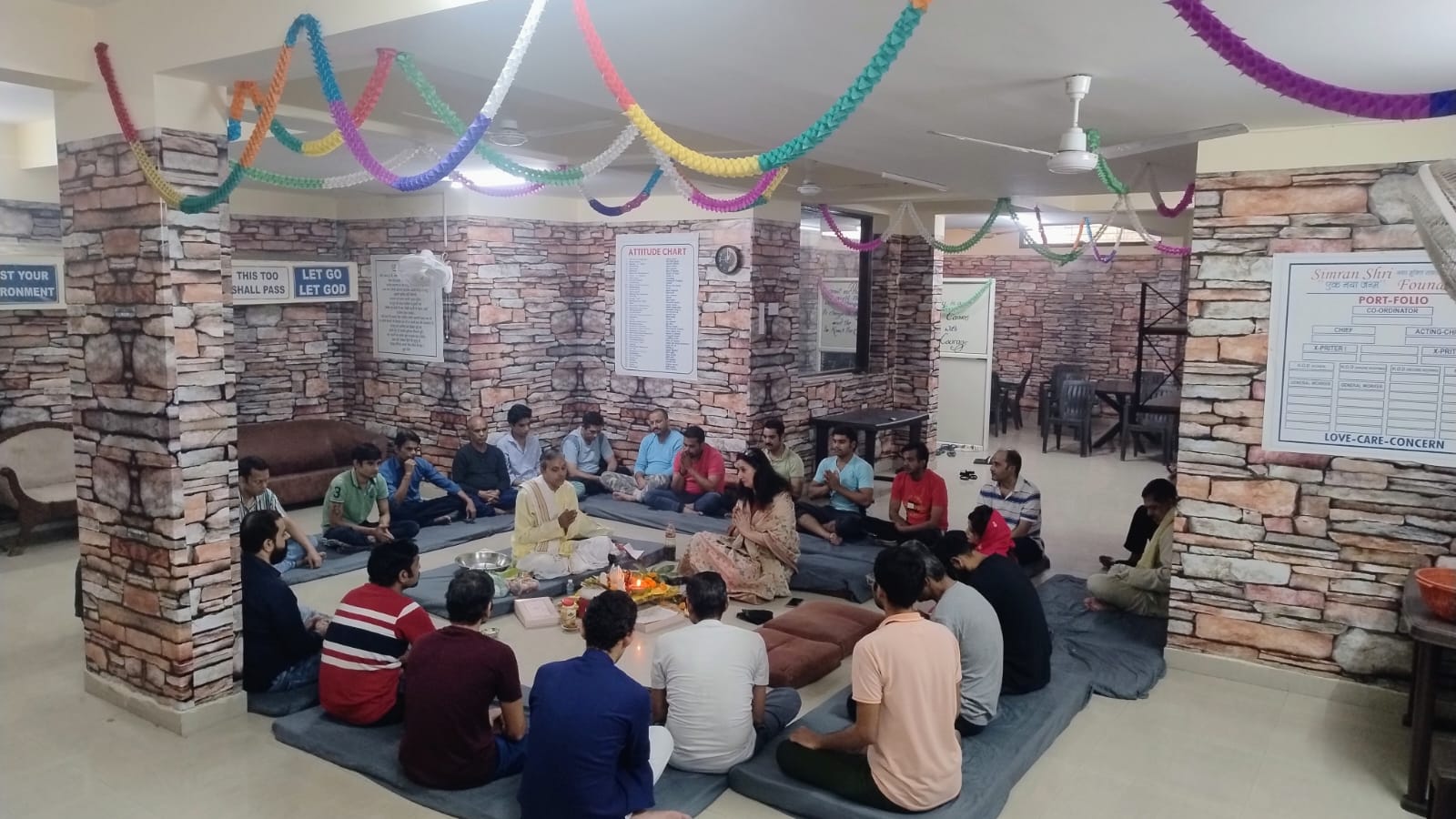
The aftercare programme is not optional — it is part of the admission agreement and included in the treatment fee. What it consists of:
Days 1-30: Intensive re-entry phase
- Daily brief check-in by phone or app with the counsellor for the first two weeks.
- Weekly in-person or video outpatient counselling session.
- Twice-weekly NA or AA meeting — either at SimranShri or at a partner meeting in the patient's city.
- Weekly family check-in with our family therapist.
- supportive care monitoring for patients on maintenance supportive care — weekly.
Days 30-90: Consolidation phase
- Weekly outpatient counselling session.
- Twice-weekly NA or AA meeting.
- Bi-weekly family check-in.
- Monthly supportive care review.
- First structured 30-day relapse prevention review with our clinical team.
Months 3-6: Ongoing support phase
- Bi-weekly outpatient counselling.
- Continued NA or AA attendance at patient's own frequency (recommended minimum twice weekly).
- Monthly family session.
- Quarterly clinical review with psychiatrist.
Months 6-12: Maintenance phase
- Monthly outpatient counselling.
- Continued self-directed NA or AA attendance.
- Quarterly family session.
- Clinical review at 9 months and continued support.
In addition, patients have unrestricted phone access to their primary counsellor for any urgent moment — a trigger event, a warning sign, a question. The default answer to "should I call?" is always yes.
Patients who show early relapse signs during aftercare have guidance on when to seek additional help — within 24 hours, with no fresh assessment queue. This is a specific feature of our aftercare programme. Early re-admission for a 2-3 week stabilisation stay is dramatically more effective than letting a relapse run. The patients and families who use this feature have better long-term outcomes than those who try to manage a slipping situation at home.
What families contribute in the aftercare year
Aftercare is not exclusively the patient's project. Families have specific roles, which are mapped out during the family therapy component.
- Maintaining a substance-free home environment for at least the first year — all alcohol out of the house, no one drinking in front of the patient, no social events at home where alcohol is served.
- Attending family sessions consistently — even when things seem to be going well, because the quiet months are when old patterns reassert themselves.
- Calling our family therapist immediately if you notice warning signs — withdrawal, secretiveness, mood changes, missed meetings.
- Protecting the patient's aftercare schedule from family pressure to "get back to normal" too quickly — no forcing early re-entry into social events, no pressure to resume old roles before the patient is ready.
- Attending monthly family sessions even if the patient is doing well — the aftercare year is a family year, not just a patient year.
Signs the aftercare is working — and when to escalate
Signs aftercare is working:
- Patient is attending scheduled sessions and meetings consistently.
- Patient is sharing openly in counselling — including about struggles and cravings rather than only reporting "everything is fine."
- Sleep is stabilising, mood is gradually improving, energy is returning (this takes 3-6 months typically).
- Relationships within the family are gradually repairing, with small improvements visible month over month.
- Patient is building or rebuilding a sober social world — friends in recovery, activities that do not involve substances.
Signs it is time to escalate — and these warrant a call to our clinical team today, not next week:
- Missed counselling sessions, missed meetings, declining engagement.
- Withdrawal from family, increased time alone, secrecy.
- Money going missing, or the patient asking for money with unclear explanations.
- Mood changes without clear cause — irritability, agitation, flat affect.
- Contact resuming with people from the using network.
- Any direct admission of a craving episode or a near-use moment.
- Any use — even once, even "just a beer." This is not a moral failure, it is a clinical event and needs immediate response.
Patients and families in the aftercare programme have direct lines to our counselling and clinical teams. Use them early. The default response to "is this worth calling about?" is yes. The cost of an unneeded call is zero; the cost of a missed early-warning sign is substantial.
- Residential treatment is phase one. The continued aftercare programme is phase two. Without phase two, the gains of phase one do not reliably hold.
- Relapse risk is front-loaded — the first 30 days are highest-risk, and the first 90 days account for the majority of first-year relapses.
- Aftercare intensity is calibrated to the risk curve: daily contact in the first two weeks, weekly through 90 days, supervised support through the rest of the year.
- Fast-track re-admission (within 24 hours, no new assessment queue) is a specific feature. Early re-admission for a 2-3 week stay prevents full relapse cascades.
- Family role in aftercare: substance-free home, consistent attendance at family sessions, protection of the aftercare schedule, immediate escalation of warning signs.
- The default answer to "should I call the clinical team?" is yes. The cost of an unneeded call is zero.