Most patients entering residential rehab in India have heard of AA or NA, but few understand what the 12-step framework actually reviews — and even fewer know how it integrates with clinical addiction treatment. This article is a plain-English primer.
What the 12 steps actually are
The 12 steps are a sequence of recovery principles developed by Alcoholics Anonymous in 1935. They cover admitting powerlessness over the substance, acknowledging harm caused, making amends where possible, and building a new framework for daily living anchored in honesty, community, and service to others in recovery.
Narcotics Anonymous adapted the same 12 steps for drug addiction specifically. The steps themselves are largely identical; the peer community and recovery context differ.
Why the framework works
Large-scale observational studies consistently show that patients who engage actively with AA or NA have better long-term sobriety outcomes than patients who do not. The mechanisms appear to be: sustained peer accountability, daily structure, a community of people who understand the lived experience of addiction, and a framework for making ongoing life decisions that support recovery.
It is not a replacement for structured support. For severe alcohol or opioid dependency, detox and psychiatric care must precede or accompany 12-step work. But as a long-term anchor after clinical treatment ends, the 12-step framework is what many recovered patients credit as the backbone of their sustained sobriety.
AA and NA in India today
AA India has active meeting networks in every major metro — Delhi, Mumbai, Bangalore, Kolkata, Chennai, Hyderabad, Pune, Ahmedabad — and growing presence in Tier-2 cities including Noida, Gurugram, Faridabad, Lucknow, Jaipur, Chandigarh, and Kanpur. NA India’s footprint is narrower but expanding rapidly, particularly in NCR and Punjab.
In Delhi NCR specifically, AA meetings run daily across South Delhi (CR Park, Greater Kailash, Chanakyapuri, Defence Colony), Central Delhi (Connaught Place area), and East Delhi (Preet Vihar, Vaishali). NA meetings run in South Delhi (Lajpat Nagar, Saket, Hauz Khas) and have a particularly active young-adult scene.
How it integrates with clinical rehab
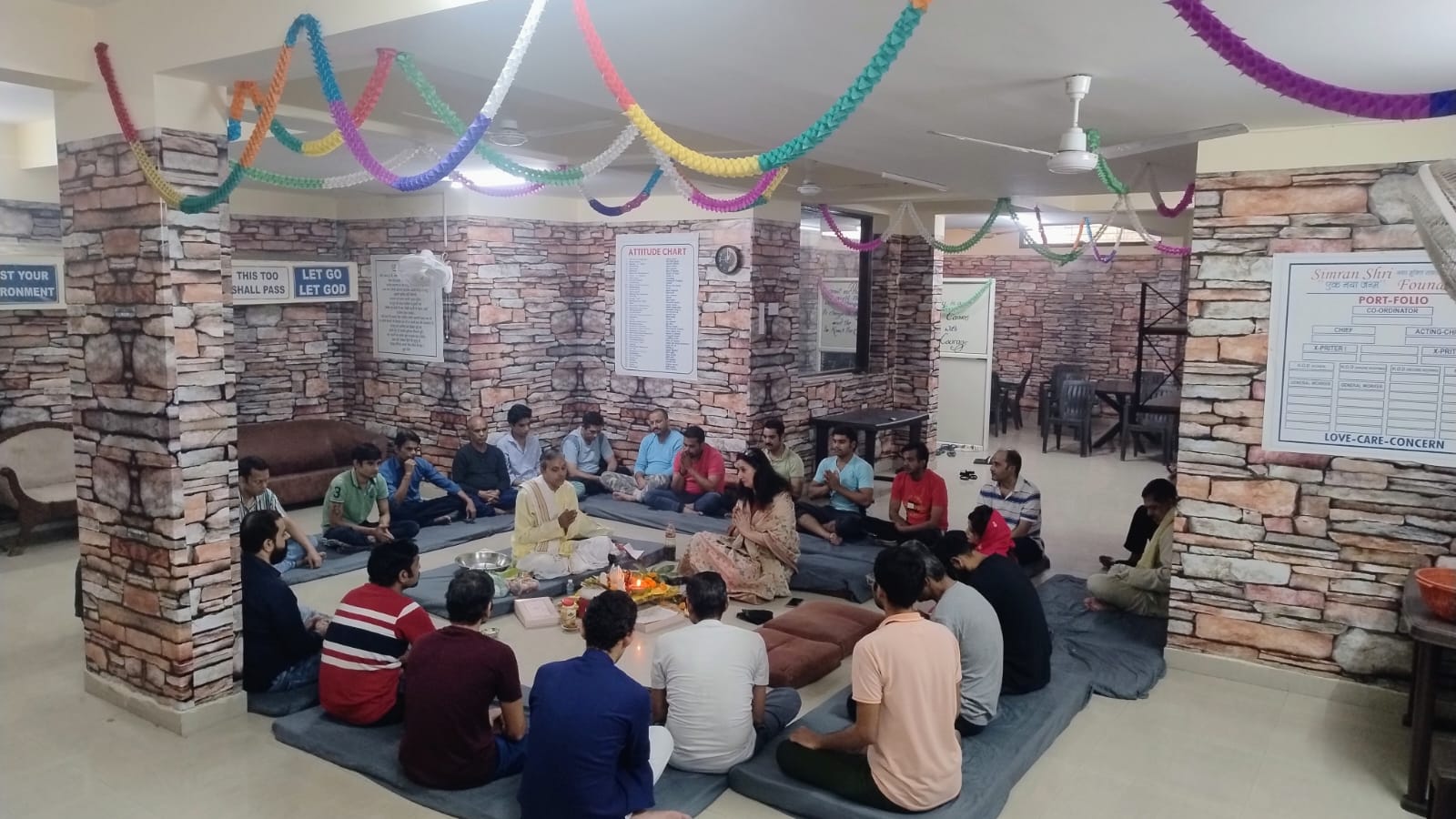
At SimranShri, the 12-step framework is integrated into residential programme structure. Daily in-house meetings start in week 2. Patients work through steps 1–3 with an in-programme sponsor during their inpatient stay. Before discharge, every patient is connected to AA or NA meetings local to their home city, with sponsor handoff arranged where possible.
The aftercare phase is where 12-step engagement becomes the primary recovery anchor. Clinical aftercare runs continued support; AA and NA engagement is designed for lifelong participation — weekly meetings, continued step-work, eventually sponsoring newer members.
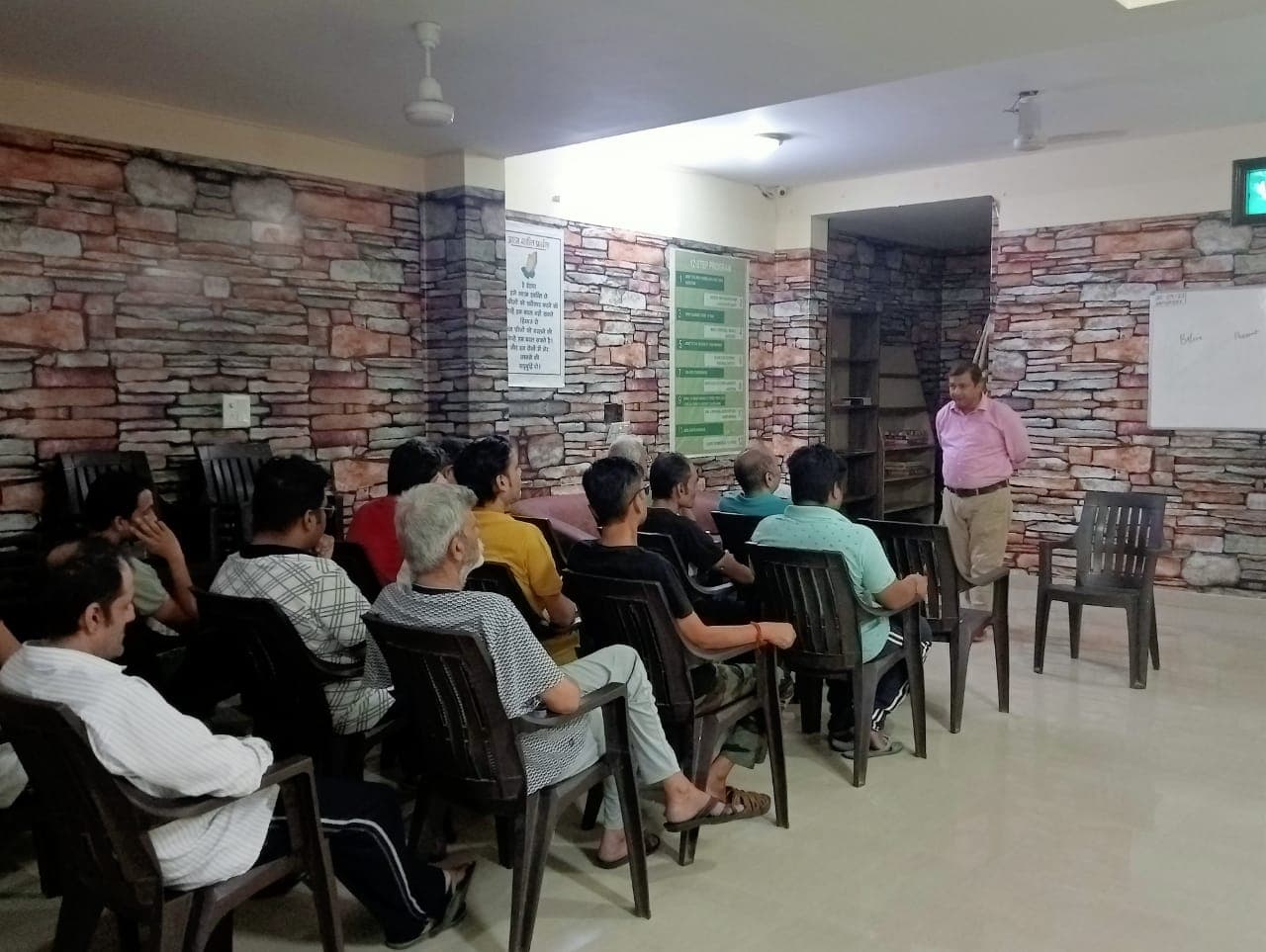
AA and NA members visit SimranShri weekly to share their recovery stories with current patients. For patients who have never met someone with 15+ years of sustained sobriety, those visits are frequently transformative.
Does it work without religion?
This is the single most common question. The 12-step framework refers to a "higher power" in steps 2, 3, 5, 6, 7, and 11. The founders explicitly left the interpretation open — members define "higher power" as God, the universe, the AA community itself, nature, or abstract moral frameworks.
In practice, atheists, agnostics, and members of every religion participate in AA and NA meetings across India. The spirituality of the 12 steps is explicit; the religiosity is individually chosen. For patients uncomfortable with religious framing, secular step-interpretations are available and widely used.
The short answer: yes, it works without religion. Millions of recovered addicts worldwide prove the point.
AA India (aadelhi.org and aaindia.org) and NA India (naindia.in) maintain meeting schedules nationally. Our admissions and aftercare teams help connect every discharged patient to meetings specific to their home city.
- The 12 steps are a recovery framework developed by AA in 1935 and adapted by NA for drug addiction.
- Large-scale outcome evidence supports active 12-step engagement as a predictor of sustained long-term sobriety.
- AA and NA networks are active across Indian metros and growing in Tier-2 cities. Delhi NCR has one of the strongest meeting networks in the country.
- The framework complements clinical treatment rather than replacing it. withdrawal monitoring, therapy, and family work come first; 12-step engagement anchors long-term recovery.
- The "higher power" language is spiritual rather than religious. Atheists, agnostics, and members of every religion participate.
- At structured rehabilitation centres, 12-step integration happens during the residential programme; aftercare hands off to local meetings.